What I built on Free Lovable day
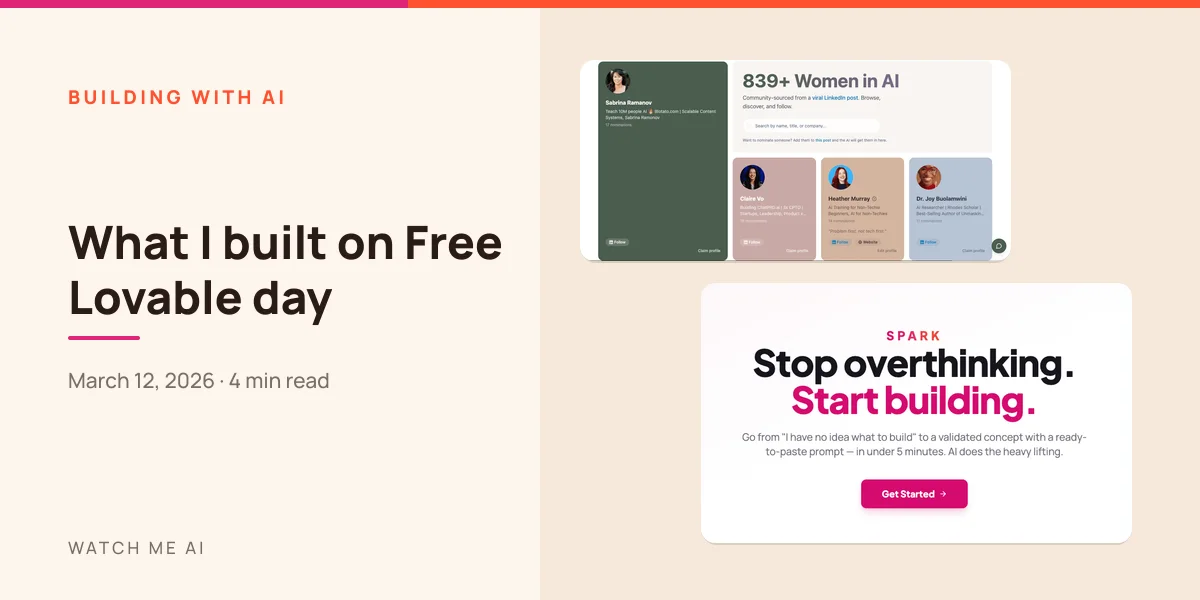
I built a searchable Women in AI directory and a startup idea finder called Spark in one day using Lovable's free International Women's Day access.
By Mollie Amkraut Mueller · · 4 min read
On Sunday, Lovable opened its doors, free, for 24 hours, to anyone who wanted to build.
It was part of SheBuilds, Lovable's initiative to get more women building with AI. For International Women's Day, they made the entire platform free worldwide. Over 120 community-hosted events across 40+ countries. Anthropic and Stripe partnered to give every participant free credits on top of it.
I've been involved with SheBuilds since their first season last fall, when I gave a talk on turning your builds into a business. So when IWD rolled around, I blocked the morning and started building.
By evening, I had two working apps.
Here's what I made:
The Women in AI Directory
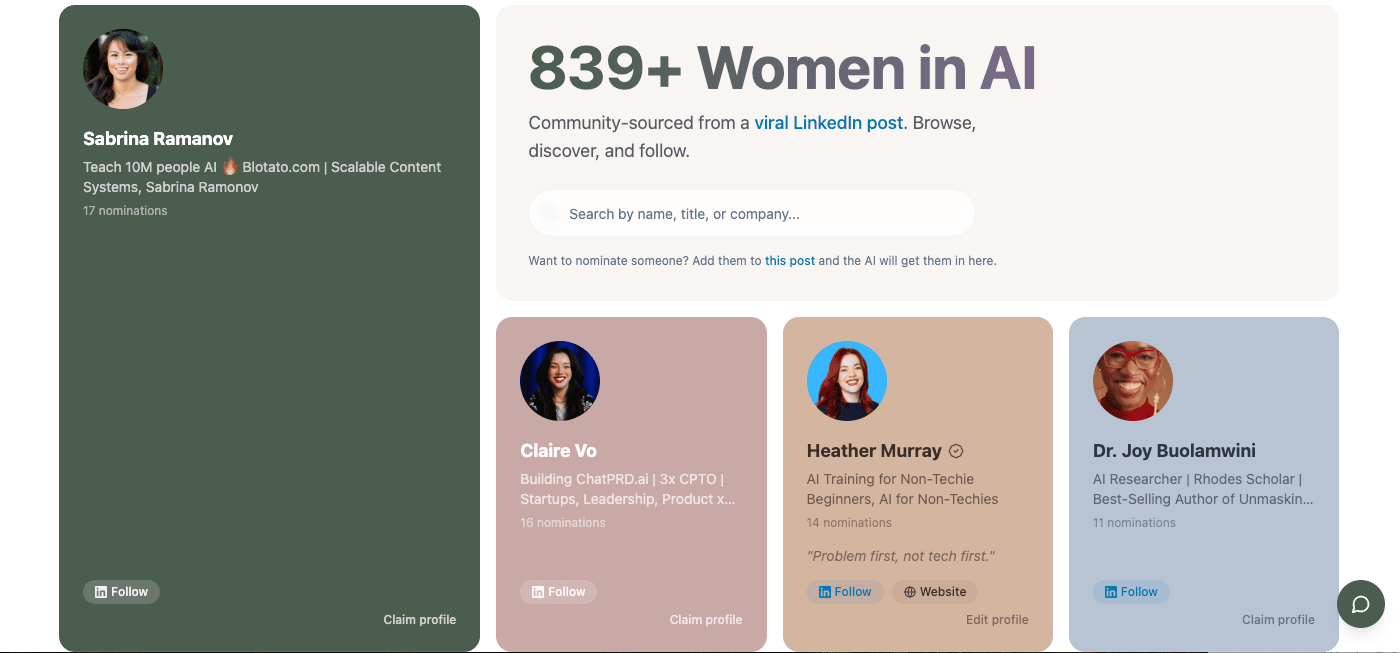
This one had been brewing for weeks. In February, I posted a question on LinkedIn: "Who are the women in AI you're learning from?"
839+ women were nominated (and counting!). Builders, researchers, educators, executives, ethicists, policy leaders. The comment section turned into this massive, community-sourced list of people worth following.
But here's the thing about comment sections: they're hard to browse, impossible to search, and easy to lose. I didn't want all that energy to just disappear.
Every woman nominated in that thread now has a profile you can browse, search by name or role, and follow on LinkedIn in one click.
I built this using Lovable (what you see), plus a few Relay automations that helped me scrape the LinkedIn comments to get everyone's names, titles, nomination count, etc.
Building a women-in-AI directory on International Women's Day, using free credits from a company that goes above and beyond to support women was, needless to say, a bit meta. And felt very right.
And it's already growing on its own. People are sharing it, claiming profiles, adding their info. You build the container, and the community fills it.
Spark: the startup idea finder
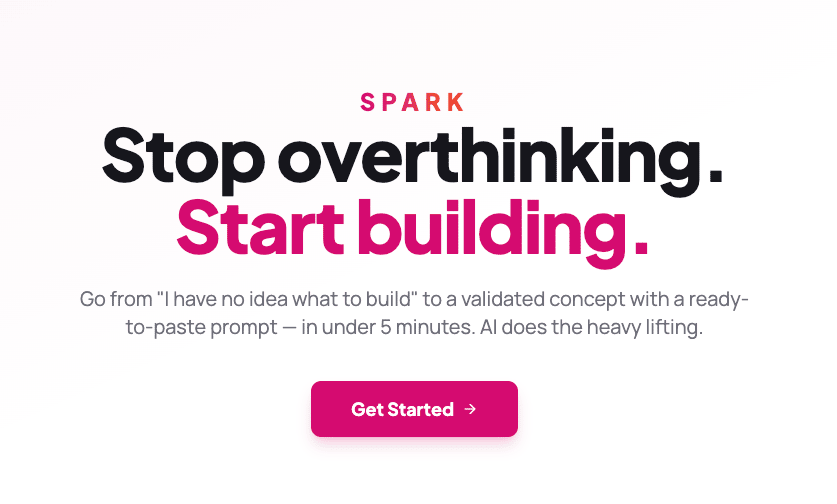
This one came from a question I keep hearing: "I want to build something, but I don't know what."
I hear it from friends. I hear it in workshops. People are excited about AI-powered building tools, but they're stuck at step zero, the idea.
So I built a tool that takes you from "I have no idea" to a validated concept with an actionable playbook in about five minutes. I'm calling it Spark.
Here's how it works:
- Discover. You fill out a short form, your skills, what you wish existed, how much time you have, what kind of project you want (full-time business, side hustle, nonprofit, just for fun), plus your LinkedIn URL.
- Ideas. AI generates 8-10 personalized startup ideas based on your background, interests, and constraints. Each comes with a founder-fit score, problem statement, and target market.
- Builder's Brief. Pick your favorite and get a full playbook: step-by-step build guide, customer acquisition strategy, pricing, tech stack, estimated time to MVP, and a launch checklist.
Here's how I built it:
- Rambled about my idea into the Lovable chat box
- Built the Lovable pages in steps
- Copied an existing Relay.app automation and updated for this app's specific data needs
- Lots of testing
What these builds tell us about applicable AI
Both of these apps took me half-day to get to a version 1. And I am not a technical person.
A year ago, building a searchable directory with profiles, search, and follow buttons would have meant hiring a developer and frankly, I'd never have done it. It was cost-prohibitive and intimidating.
That's the shift. Building software is becoming as casual as writing a Google Doc. You describe what you want. You iterate. You ship.
And the most interesting part isn't the speed, it's what you choose to build when the barrier drops. I didn't build a productivity dashboard or a CRM. I built a community resource and a tool to help people get started. When building is free, you build what you care about.
If you've been sitting on an idea, a tool for your business, a resource for your community, a side project that's been living in your notes, the barriers are lower than you think. You don't need to code. You need an idea and a few hours.